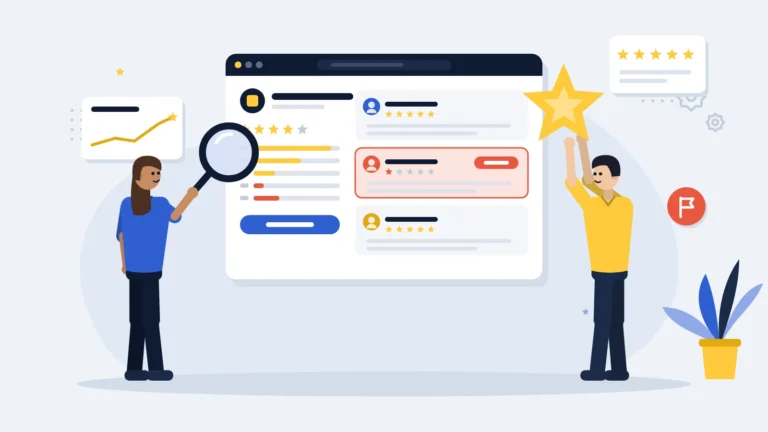
A rating that dropped
after a bad quarter, a staffing change, or a supplier failure, and has stayed down since.
AML Digital Growth provides online reputation management services for companies that need their branded search results, review profiles, and AI generated summaries to match the business they actually run. The work covers assessment, review programmes that follow platform and advertising rules, publishing that earns its place on page one, and monitoring so the next problem is caught early.
Reputation damage rarely arrives as a crisis. It shows up as a conversion rate that drifts down, quotes that go quiet after the proposal, and a sales team convinced the pricing is wrong. The searcher who reads a bad thread makes a decision and moves on, and none of that appears in your analytics as a loss.
It shows up as a conversion rate that drifts down, quotes that go quiet after the proposal, and a sales team convinced the pricing is wrong. The searcher who reads a bad thread makes a decision and moves on, and none of that appears in your analytics as a loss.
Recruiters read the same page before applying, procurement teams screen suppliers on it, and lenders and partners run the same check. Employer review sites and forum threads carry weight far outside their original audience.
When someone asks a chatbot whether your company is worth using, the answer gets assembled from reviews, forums, news, and whatever your own site says, then delivered without links to argue with.
Sources that shape those summaries are exactly the sources reputation work has to address.
Scope depends on what the assessment finds, since a rating problem and a single damaging article need different work. These are the components drawn on most often.

Across your company name, executives, products, and the complaint phrases people pair with them.

Ask every customer rather than filtering for happy ones, timed to the moment satisfaction is highest.
Including the difficult replies that decide how the next reader judges you.

Across Google, industry directories, employer review sites, and the platforms that matter in each market.
Designed to rank: substantial site pages, executive profiles, interviews, and placements on sites that already have authority.

Reporting content that breaches platform policy or local law, with documentation prepared properly rather than fired off as a form.

Brand mentions, rating movement, and how AI assistants describe the company when asked.
Holding statements, escalation contacts, and an agreed decision path before it is needed.
Speed matters, but so does not making things worse. The order below keeps early activity from drawing attention to the thing you want buried.
AML Digital Growth records what currently ranks for your brand terms, the rating and volume position on every review platform, sentiment themes pulled from the reviews themselves, and how AI assistants summarise the company today. That snapshot becomes the measure everything later is compared against.
Anything fixable at speed happens first: unclaimed and duplicate profiles, outdated details, unanswered reviews, and content that clearly breaches a platform’s own policy. Responses go out to the reviews prospects are reading now, because a considered reply changes the impression more reliably than the review ever did.
A founder or executive whose name search hurts fundraising, hiring, or partnership conversations.
The slower work follows: a steady flow of genuine reviews from real customers, site content and executive profiles strong enough to hold first page positions, and placements that a search engine treats as credible. Displacement takes months of consistent publishing, not a burst of thin pages.
Alerts run continuously on mentions, ratings, and assistant answers, with reporting that shows movement rather than screenshots of good news. Your team keeps the escalation path, the holding statements, and the response templates, so a slow week never turns into an unanswered weekend.
The industry has a credibility problem, mostly earned. Agencies sell review deletion they cannot deliver, quietly buy positive ratings, or hide negative feedback behind a survey gate. Those tactics now carry real exposure: the United States Federal Trade Commission’s rule on consumer reviews and testimonials treats fake reviews, incentives tied to positive sentiment, and the suppression of honest negative reviews as violations, and several other jurisdictions have moved in the same direction.
So the honest position is this. A truthful negative review stays up. AML Digital Growth reports content that breaks a platform rule or a law and documents the case properly, but the platform decides, and no reporting route works every time. Content that a court would need to address is a matter for your lawyers, and AML Digital Growth does not offer legal advice or pretend the two jobs are the same.
What can be changed is everything around it: how much authentic feedback sits alongside the bad, how the company answers criticism in public, how much strong content occupies your own name, and how quickly the next issue gets caught. That combination moves the impression a buyer forms, which is the outcome you were actually paying for.
Only when it breaks the platform’s rules, such as a review from someone who was never a customer, a post about a different business, a personal attack, or a competitor’s fake account. Those get reported with evidence attached. Reviews that describe a real bad experience stay, and the response written underneath them does the work instead.
Profile corrections, review responses, and policy reports can shift things within weeks. Pushing an established result down usually takes three to six months of publishing and earned placements, longer if the item sits on a high authority news or government domain. Anyone quoting a fixed date is describing a sales target, not search behaviour.
No. Fake and incentivised reviews breach platform terms and consumer protection rules, they get detected and stripped, and the penalty often costs more than the original problem. Review growth comes from asking every customer at the right moment and making it easy to respond.
Yes, and personal name searches often need it more, since there is usually less owned content to work with. That work covers profile building, speaking and interview placements, publication of substantive material under the person’s name, and a plan for content the individual cannot control.
Onboarding sets the monitoring coverage and the escalation path: who gets alerted, who holds the authority to approve a public statement, and what goes out in the first hour while facts are still being confirmed. Having the holding statement already written is what separates a contained incident from a weekend of silence.
Yes. Programmes run across the review platforms, forums, and news sources that carry weight in each market, in the relevant languages. Review and advertising regulations differ by country, so the approach is checked against local rules before anything is published or requested.
Reputation work starts from very different places, and the starting point decides the sequence.
after a bad quarter, a staffing change, or a supplier failure, and has stayed down since.
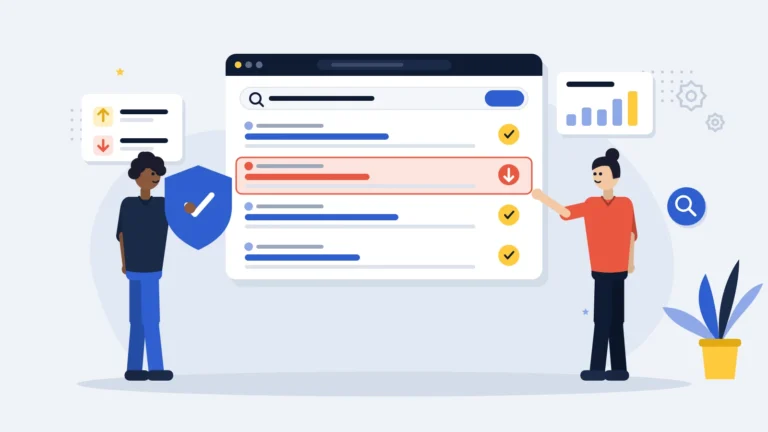
a complaint site, an old news story, a forum thread, or a scam accusation page.

whose name search hurts fundraising, hiring, or partnership conversations.
Send your company name, the executives who get searched, and the markets you sell into. AML Digital Growth will review what currently ranks, what the review profiles say, and how AI assistants describe the business, then set out what changing that picture involves and how long it should take.
If the problem turns out to be one unanswered review rather than a programme, you will hear that too.