Services

LinkedIn Ads Agency for B2B Spend That Has to Pay Back Have to Perform

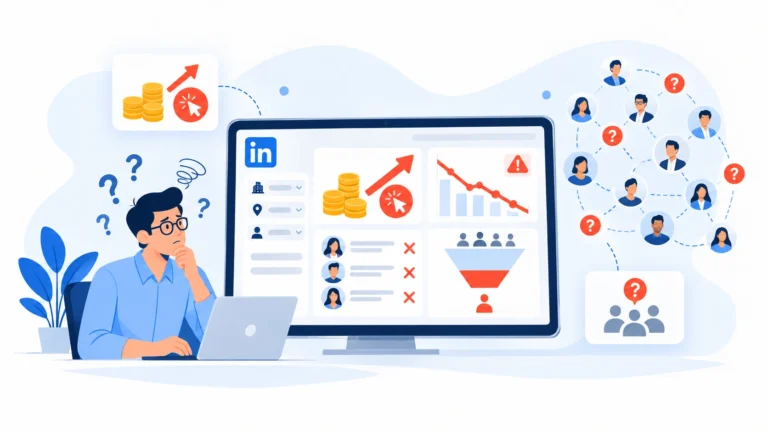
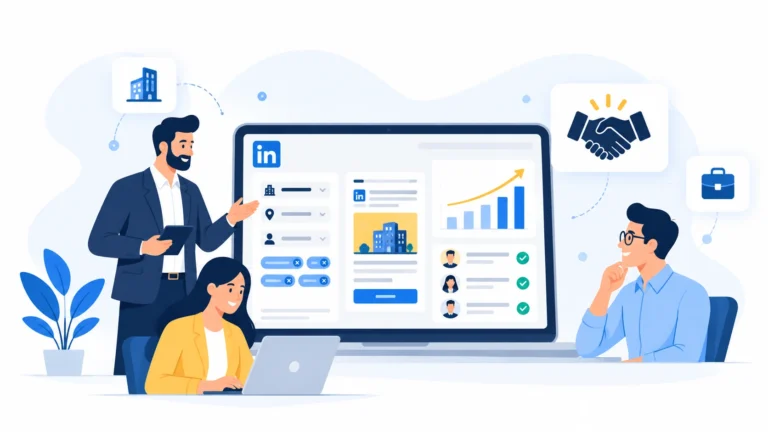
Cost per lead looked acceptable on the dashboard. Then sales worked the list and found students, job hunters, two competitors, and a handful of people who downloaded a guide and have no intention of buying anything. The quarter produced plenty of leads and almost no pipeline. <br> AML Digital Growth works as a LinkedIn ads agency for companies selling considered, high-value products to named roles inside named companies. The work covers audience and account targeting, the formats that actually earn attention on the platform, offers worth filling in a form for, and reporting that follows a lead into the CRM rather than stopping at the download.

What the work covers

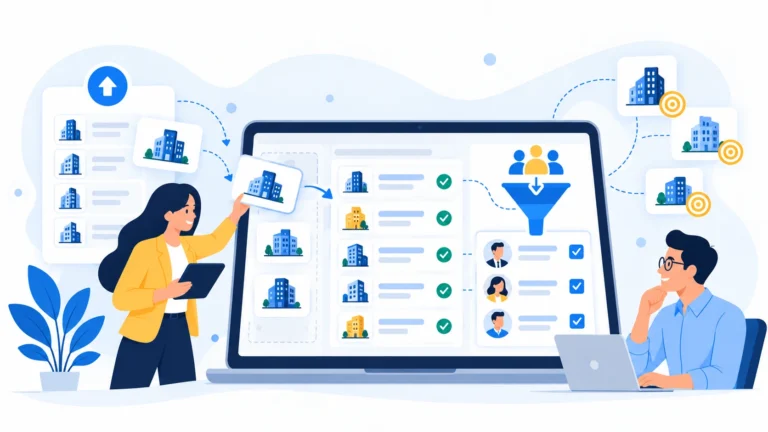
  • Targeting by role, seniority, company, and account list, not broad interest guesses
  • Thought leader, document, video, and conversation formats matched to funnel stage
  • Reporting that ties spend to meetings, opportunities, and closed revenue
The pattern

Why LinkedIn Costs More and Can Still Be Worth It

Clicks on LinkedIn cost several times what the same click costs on Meta, and that single fact kills a lot of campaigns before they are given a fair test.

  1. The comparison is misleading though

    Because on LinkedIn you are choosing the job title, the seniority, the company size, and often the exact account list.

  2. The maths only works above a certain deal value

    When a closed customer is worth five figures or more, paying considerably more per click to reach forty genuinely relevant decision makers beats reaching forty thousand people who will never sign a purchase order. Below that threshold, the platform usually cannot carry the acquisition cost.

  3. Most wasted LinkedIn budget comes from three habits rather than from the platform itself

    Audiences built so wide that the targeting advantage disappears, a single gated asset asked of people who have never heard of the company, and campaigns judged on form fills that sales quietly ignores. AML Digital Growth treats those three as the first things to fix.

Precision is what the premium buys.

Capabilities

What AML Digital Growth Runs in the LinkedIn Account

Four areas decide whether LinkedIn produces pipeline. Each one is capable of sinking the other three on its own.

  1. Audience and account targeting

    Audiences built from job function, seniority, skills, company size, and industry, then tightened with exclusions that keep competitors, recruiters, and students out. Matched audiences carry your own target account lists, CRM segments, and website visitors into the platform, so account-based programs can run against a real list instead of a lookalike approximation.

  2. Formats and creative

    Thought leader ads that run from a named person's profile, because a recognizable face outperforms a company logo in a professional feed. Document ads for research and frameworks people will trade an email for, short video for problem framing, and conversation ads where a guided exchange suits the offer better than a landing page.

  3. Offer and funnel design

    Deciding what to ask for at each stage, which is usually where campaigns are won. Cold audiences get value without a gate, warmer audiences get the gated asset, and only people showing real intent get asked for a demo. Lead forms and landing pages are tested against each other rather than assumed, since the easier conversion is not always the more useful one.

  4. Tracking and CRM connection

    Insight Tag setup, conversion definitions that match how your business actually counts a lead, and lead data passed into the CRM with campaign detail attached. Offline conversion feedback closes the loop, so the platform optimizes toward leads that progressed rather than leads that merely submitted.

Working method

How Campaigns Get Built and Scaled

Long sales cycles mean the early weeks cannot be judged on revenue. The sequence below is built to produce reliable signals before budget scales.

  1. Audit, ICP, and tracking

    AML Digital Growth reviews past campaign performance, audience definitions, and what happened to previous leads once they reached sales. The ideal customer profile gets translated into targeting the platform can execute, and tracking is corrected before new spend goes live.

  2. Build and first tests

    Campaigns launch across a small number of tightly defined audiences, each with a distinct offer and format, so results can be attributed to a decision rather than a guess. Bidding starts conservative, since manual control matters more here than on platforms with far cheaper inventory.

  3. Feedback loop with sales

    Lead quality gets reviewed with the people actually calling the leads, usually every two weeks early on. Their verdict reshapes targeting, offers, and form questions far faster than platform metrics can, and it stops a campaign that looks efficient from running for a quarter while producing nothing sellable.

  4. Scale what converts downstream

    Budget moves toward the audiences and offers producing meetings and opportunities, not the lowest cost per form fill. Retargeting sequences get built out for accounts showing engagement, and tired creative is replaced before frequency pushes costs up in a small audience.

Talk Through Your Target Accounts

After launch

Reporting That Follows the Lead Into the CRM

A report ending at lead volume and cost per lead tells you almost nothing about a business with a six month sales cycle. Two campaigns can deliver identical cost per lead while one fills the pipeline and the other fills a spreadsheet nobody opens twice.

Reporting from AML Digital Growth tracks leads through to the stages your CRM already uses: accepted lead, meeting booked, opportunity created, closed revenue where the cycle allows it. Alongside that sit account engagement for target lists, cost per opportunity, and which audience and offer combinations are responsible.

Where the sales cycle is too long for a clean quarterly read, that gets stated rather than papered over with a modelled number. Early indicators such as meeting rate and account engagement are used as leading signals, with the honest caveat that they are predictions and not revenue.

Stages your CRM already uses

  • Accepted lead
  • Meeting booked
  • Opportunity created
  • Closed revenue where the cycle allows it
Before you start

Questions B2B Marketers Ask Before Committing Budget

Enough that each audience receives meaningful impressions rather than a trickle, since thinly funded campaigns never gather enough data to judge. Budget requirements scale with audience size, number of markets, and how many offers are being tested. During scoping AML Digital Growth will say if the available budget is better spent on fewer audiences or on a different channel entirely.

By attacking the inputs rather than the bid alone: tighter audiences so impressions are not wasted, creative that earns a click instead of buying one, offers matched to how familiar the audience already is, and exclusions that remove the traffic sales will reject anyway. Cost per opportunity is the number worth defending, and it often improves while cost per lead rises.

It depends on the offer. Pre-filled forms convert at a higher rate because nobody has to type, which suits research assets and event registrations. Landing pages ask more of the visitor and therefore filter harder, which often suits demo requests. Both get tested rather than assumed, because the cheaper conversion is sometimes the less valuable one.

Yes, through thought leader ads, which promote a post from an individual's profile with the company's budget behind it. Permission is granted by that person inside the account. These tend to perform well because professional feeds respond better to a named human than to brand messaging, and AML Digital Growth usually tests a founder or subject expert early.

Lead data is passed into the CRM with campaign, audience, and creative detail attached, so sales outcomes can be read back against the source. Offline conversion uploads tell LinkedIn which leads progressed, which improves optimization over time. The exact setup depends on your CRM and gets scoped during onboarding.

Fees are set against scope, covering audience and creative volume, number of markets, and reporting depth, rather than taken as a percentage of spend. Campaigns run in your own ad account with billing direct to LinkedIn, so audience data, conversion history, and creative stay with the business if the engagement ends.

Bring the Account List and the Deal Size

Send your ideal customer profile, average contract value, and access to the current ad account if there is one. AML Digital Growth will assess whether LinkedIn can carry your acquisition cost, where the current spend is leaking, and what a credible test would look like.

If the numbers do not support the channel, you will get that answer before a proposal.