
Web testing agents
For your site or web app.

A penetration test tells you where you stood on the day it ran. Sofy's AI security testing agents run continuously, analyzing your live application's network traffic, APIs, and headers to surface vulnerabilities without the manual setup a traditional pen test needs. Run the agent once and get back actionable findings, not a raw scan log. Each one arrives with a remediation guide, so your engineers can fix it without a security specialist translating it first.
A static code scan reads your source. A once-a-year penetration test checks a snapshot.
With this week's dependencies, this release's new endpoint, and this morning's configuration change.
They test the running application itself, the same way an attacker would reach it.
So a finding reflects what is actually exposed right now, not what the source code implied months ago.
Four checks run together instead of across four separate tools.
Comprehensive security scans identify OWASP Top 10 vulnerabilities and zero-day threats, covering issues such as injection flaws, broken authentication, and insecure configurations.
Automated checks are built around GDPR, HIPAA, and SOC 2, with compliance reporting generated automatically so teams can demonstrate adherence without assembling evidence by hand.
Automated ethical-hacking simulations test your application's defenses against real attack patterns, run on a schedule rather than a one-off engagement.
Real-time, 24/7 monitoring flags suspicious activity and emerging risks as they happen, rather than only at scheduled scan intervals.
A finding isn't the end of the report.
So your engineering team can act on it directly instead of waiting on a security specialist to interpret the scan.
So a vulnerability the agent discovers fits into your team's existing workflow rather than starting a separate process.
The agents automate the parts of penetration testing that don’t need to be manual: running ethical-hacking-style attack simulations against your application on a schedule instead of a one-off engagement. For most teams, that sharply reduces how often a full manual pen test is needed, while still leaving room for deeper manual testing where it adds the most value.
The result is coverage between engagements, not a replacement for the judgment a human tester brings to a complex finding.
DAST, or Dynamic Application Security Testing, agents automatically analyze your running application's network traffic, APIs, and headers to surface vulnerabilities, without the manual setup traditional penetration testing requires. Run the agent once and get back actionable security findings instead of a raw scan log.
The agents run comprehensive scans covering the OWASP Top 10 categories, things like injection flaws, broken authentication, and insecure configurations, as well as checks aimed at catching zero-day threats before they can be exploited in production.
It automates the parts of penetration testing that don't need to be manual: running ethical-hacking-style attack simulations against your application to test its defenses, on a schedule rather than a one-off engagement. For most teams it dramatically reduces how often a full manual pen test is needed, while still supporting deeper manual testing where it adds value.
Automated checks are built around common regulatory and security frameworks including GDPR, HIPAA, and SOC 2, with compliance reporting generated automatically so teams can demonstrate adherence without assembling evidence by hand.
Threat detection runs continuously, 24/7, flagging suspicious activity and emerging risks in real time rather than only at scheduled scan intervals.
Yes. Findings can be routed into your existing security incident response tooling, so vulnerabilities discovered by the agents fit into the workflow your security team already uses rather than creating a separate process to manage.
Each finding comes with a detailed remediation guide describing what the issue is and how to fix it, so engineering teams can act on results directly instead of needing a security specialist to translate the finding first.
You can start with a free, no-cost security assessment that returns instant results, giving you a first look at your application's exposure before committing to ongoing monitoring.
Security agents share a platform with Sofy's other AI testing agents, so a vulnerability found during a routine run surfaces alongside the rest of your release checks.
For your site or web app.
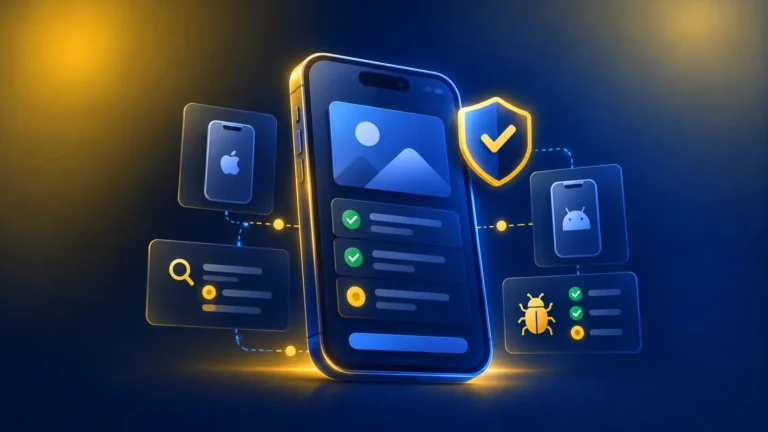
For iOS and Android.

Help trace the root cause when something fails.
Run a no-cost assessment and get instant results on where your application stands before you commit to ongoing monitoring.